A Guantánamo Judge Threw Out Khalid Sheikh Mohammed's 2007 FBI Confession
Relity · · evidence, not verdicts
Lt. Col. Michael Schrama ruled the statements were not given voluntarily. Prosecutors have days to decide whether to appeal. Trial is set for June 2028.
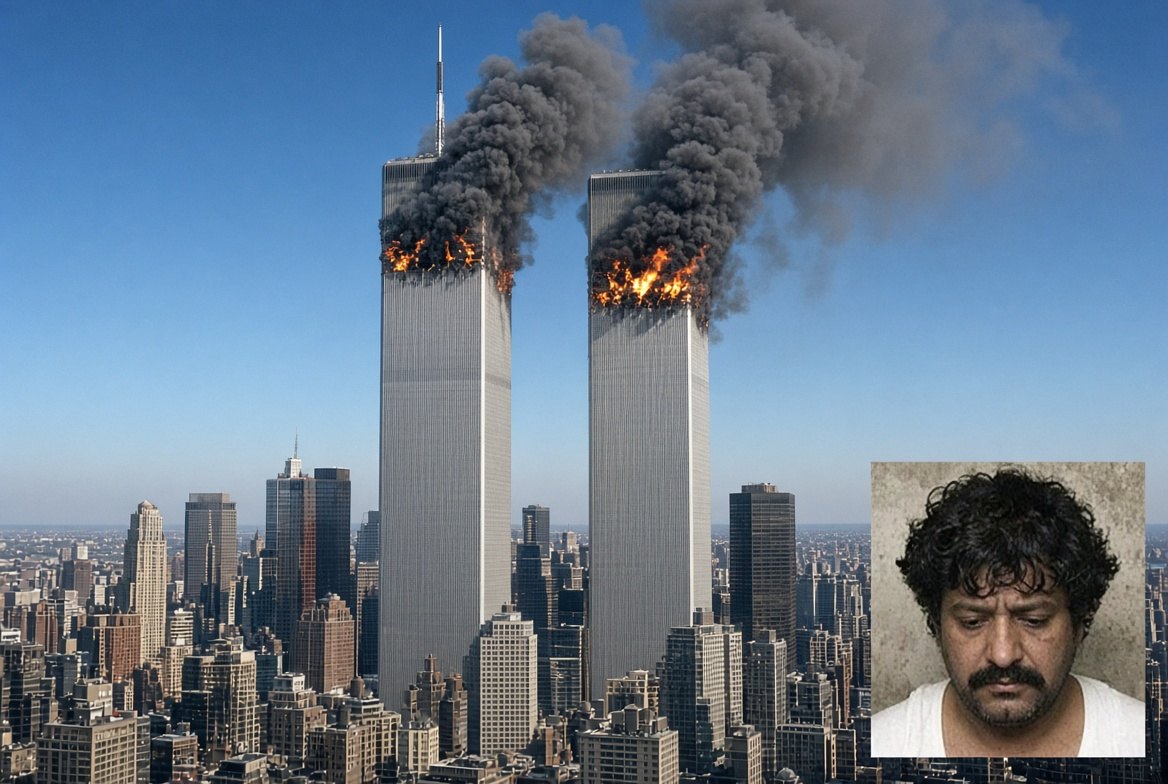
The September 11 case at Guantánamo Bay lost its central confession on Friday, twenty-one months before the trial date the same judge set earlier in the week.
What we know
On 28 August 2026, Air Force Lt. Col. Michael Schrama, the military judge presiding over the September 11 case, ruled that statements Khalid Sheikh Mohammed made to FBI agents in 2007 cannot be used against him at trial.
Schrama found that prosecutors had not carried their burden of showing the statements were voluntary. He described the FBI questioning as "an unbroken continuation of the CIA's psychological conditioning and severe coercion," and found that the agents intentionally failed to tell Mohammed that he had a right to remain silent, that he could consult a lawyer, or that what he said could be used against him at a trial. The finding is one of deliberate omission by the agents, not oversight.
The written ruling has not been released publicly. Its unclassified contents have been described by lawyers who have read it, and that is the basis for the quotations here.
The 2007 sessions matter because of how they were built. Mohammed was captured in Pakistan in March 2003 and held in CIA custody at overseas sites until September 2006, when he was moved to Guantánamo. In early 2007 the FBI sent in agents who had not taken part in the CIA program to take fresh statements using conventional interview methods — a practice known in the commissions as a "clean team." The theory was that the new statements would stand on their own, separate from what came before.
Schrama's ruling says that separation does not hold for Mohammed. It is the same conclusion another military judge, Air Force Col. Matthew McCall, reached in April 2025 for co-defendant Ammar al-Baluchi, charged as Ali Abdul Aziz Ali and a nephew of Mohammed — that torture and isolation had rendered the statements involuntary even though the FBI agents used traditional interview techniques. That ruling applied only to al-Baluchi. It is under appeal, argued before the Court of Military Commission Review in February 2026, with no decision reported since.
Prosecutors had described the 2007 interrogations as the government's most crucial evidence in the case against Mohammed. They are the account in which he set out his role in planning the attacks, given without the CIA in the room. Schrama's ruling removes them.
Chief prosecutor Rear Adm. Aaron C. Rugh said: "The prosecution will review the ruling and will make a decision on whether to appeal in the near future."
Schrama is the fifth military judge to preside over the case. He was assigned in July 2025 and held his first hearing that December, after roughly a year in which the case did not sit. Days before this ruling he set a trial date of 5 June 2028.
The plea agreements are already gone. Mohammed, Walid bin Attash and Mustafa al-Hawsawi signed plea agreements in July 2024 that would have removed the death penalty in exchange for guilty pleas. Then-Defense Secretary Lloyd Austin withdrew them within days. In July 2025 the US Court of Appeals for the District of Columbia Circuit held that Austin had the authority to do so, and the agreements were cancelled. Prosecutors are again seeking the death penalty.
A fifth man charged in the case, Ramzi bin al-Shibh, was severed from it in September 2023 after being found mentally incompetent to stand trial. Prosecutors are seeking to rejoin him; that question sits with a separate judge, Army Col. Thomas Hynes.
The four men currently joined in the case are Mohammed, bin Attash, al-Hawsawi and al-Baluchi, all charged in connection with the attacks of 11 September 2001.
The case has been in pretrial litigation for well over a decade without reaching a jury, and the admissibility of statements taken after the CIA program has been the question that keeps stopping it. Schrama's ruling is not the first of its kind in the commissions. McCall reached the same result for al-Baluchi last year. The equivalent 2007 FBI statements were also thrown out in the separate USS Cole case against Abd al-Rahim al-Nashiri — an exclusion the Court of Military Commission Review upheld in January 2025.
What is not confirmed
Whether the government will appeal. Schrama gave prosecutors five days to give notice, and said they could request five more. Rugh's statement said only that the prosecution would review and decide. No notice of appeal had been reported, or posted to the public commissions docket, as of Saturday 29 August.
What it means for the co-defendants. Schrama has not ruled on the FBI statements of bin Attash and al-Hawsawi. Those questions are still open in front of him, and this ruling does not decide them.
Whether the June 2028 date holds. The trial date was set two days before the ruling landed. Neither Schrama's scheduling order nor Rugh's statement addresses whether an appeal would move it.
What is left of the government's case. Rugh's statement did not address what the prosecution would rely on at trial if the exclusion stands. That is the question worth watching, because it is the one that decides whether a trial in 2028 is realistic.
What happens next
The near-term clock is the appeal window, which runs to roughly 2 September and can be extended to about 7 September. If prosecutors give notice, the challenge would go to the US Court of Military Commission Review, the appellate body for the commissions, whose decisions can in turn be taken to the DC Circuit — the same court that cancelled the plea agreements last year. That path has taken a year or more at every previous stage of this case. Al-Nashiri's ran seventeen months. Al-Baluchi's has been pending sixteen and counting.
If the government does not appeal, or appeals and loses, the case proceeds toward the 2028 date without Mohammed's own account of the plot in the prosecution's hands. Schrama would still have to rule on the remaining defendants' statements, and the parties would still have years of classified-discovery litigation in front of them.
The 25th anniversary of the attacks falls on 11 September 2026, two weeks from now. Nearly 3,000 people were killed. The men charged at Guantánamo with plotting the attacks have still not gone to trial.
Sources
[object Object],[object Object],[object Object],[object Object],[object Object],[object Object],[object Object],[object Object],[object Object]