Floods kill hundreds at Nepal-Tibet border as new hazard halts rescue
Relity · · evidence, not verdicts
Death toll reaches 543 in Nepal-Tibet flooding. A secondary hazard—a barrier lake—now threatens fresh floods and has stalled rescue work.
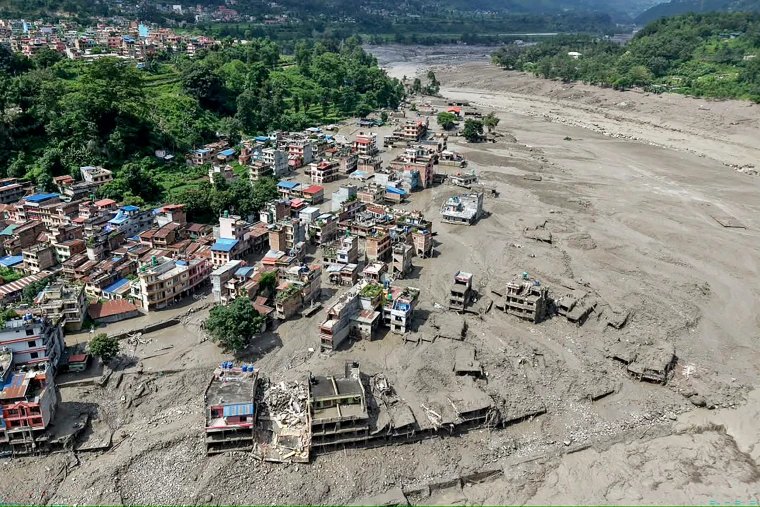
A flash flood struck the Nepal-Tibet border region. The death toll has risen to 543. Rescue operations have resumed, then halted again.
The halt is due to a barrier lake. This is a body of water formed when flood debris or a landslide blocks a river's natural course. The barrier lake now poses a secondary flood risk. Rescuers fear it could rupture and cause additional flooding downstream.
What we know
Multiple independent newsrooms—the Guardian, Al Jazeera, BBC, and France 24—are all reporting on an active flood disaster at the Nepal-Tibet border involving significant loss of life and ongoing rescue efforts.
All four outlets confirm that a barrier lake has formed as part of this event. The BBC and Al Jazeera both specifically report that this barrier lake is now a concern for rescuers and has affected their ability to continue operations in the area.
France 24 has published a minute-by-minute reconstruction of the flood event, indicating that a detailed timeline of the disaster's progression exists in the public record.
The Guardian's reporting uses the phrase "latest updates," indicating the situation remains fluid and that new information is emerging.
What is not confirmed
None of the four newsrooms provide a specific date or time for when the initial flood occurred.
None of the four newsrooms specify what caused the initial flash flood. Whether it resulted from heavy rainfall, a glacial lake outburst, a landslide, or another trigger is not stated in their headlines.
The exact timing and nature of the barrier lake's formation—whether it is actively growing, stable, or showing signs of rupture—is not detailed in the headlines. The BBC frames rescuers' concerns as fear of what *could* happen, but the current state of the barrier lake itself is not described.
The specific geographic extent of the affected area, beyond "Nepal-China border," is not given in these headlines.
None of the four outlets specify when rescue operations are expected to resume or under what conditions the barrier lake threat might be resolved.
Why it matters
Flash floods in mountainous border regions present compounding hazards. A primary flood followed by a secondary flood triggered by a barrier lake can extend the duration of the disaster, increase total casualties, and complicate rescue operations that are already difficult in remote terrain.
The formation of a barrier lake represents a transition point in the disaster: from immediate response to active flood, to a period of heightened uncertainty where a new trigger waits upstream. Rescue teams must balance the need to reach survivors against the risk posed by the barrier lake.
The involvement of two countries—Nepal and Tibet (an autonomous region of China)—may affect coordination of rescue efforts and disaster response, though the headlines do not specify what coordination structures exist.
What happens next
Rescue operations are currently halted. The barrier lake is the immediate focus. Possible outcomes include: the barrier lake stabilizes without rupturing and rescue work resumes; the barrier lake ruptures, triggering a new flood and further complicating rescue efforts; or teams find a way to safely manage the barrier lake while rescue operations continue.
Al Jazeera's mention of the barrier lake halting rescue suggests that decisions about when and how rescue will resume depend on assessment of the barrier lake threat. The BBC's focus on why rescuers fear the barrier lake indicates that expert evaluation of the risk is ongoing.
The Guardian's use of "latest updates" format suggests the story will continue to develop, with new death tolls, new damage assessments, or updates on rescue progress likely to follow.
Sources
Guardian · Al Jazeera · BBC · France 24